Memories of Lower Broughton
Hough Lane Footbridge | Joe Murray, Local Historian and Writer
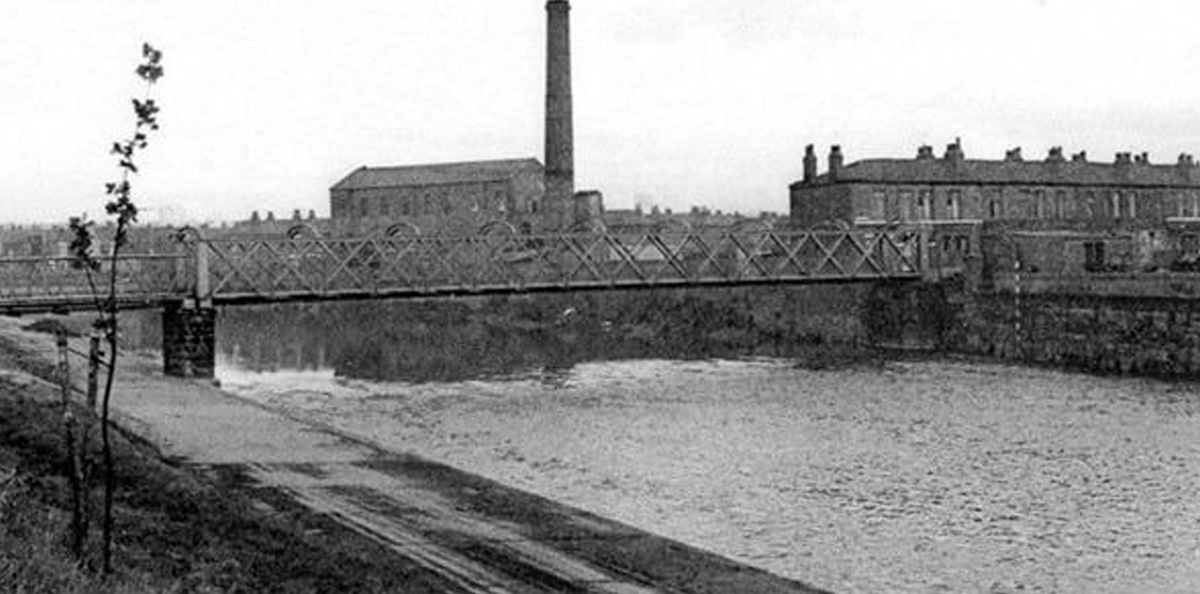
Hough Lane Bridge (Facebook – We Grew Up in Salford)
Want to listen instead? Click below.
The Hough Lane footbridge has been an important route for many groups of Salfordians over the decades. Factory workers living in the Lower Broughton estate would use it to reach their jobs in and around Cross Lane and Pendleton – and maybe even as far away as The Docks. On Sundays, families would cross to enjoy the fresh air and green spaces of Peel Park and during the long school holidays, local children crossed to the park – safe from any road traffic.
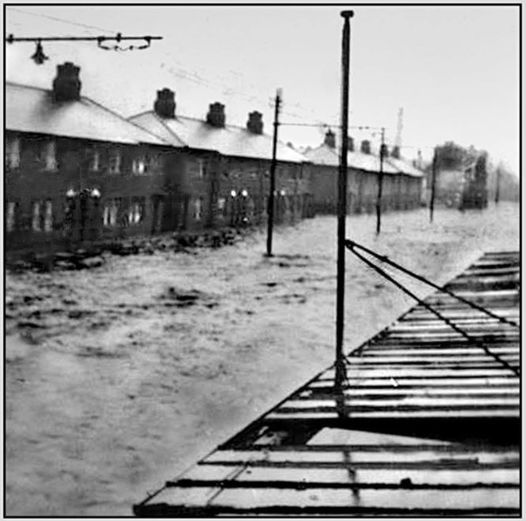
Lower Broughton Road in 1946 Floods (Facebook – We Grew Up in Salford) After flood prevention work in the 1960s, the bridge is now almost double its original length. Evidence of this extension can be seen on the form of a stone pier on the park side, supporting the extra section.
The riverside path towards the Wallness Bridge at Fredrick Road is a relatively new addition. At one time, the immediate view was of a large three-storey mill with its tall chimney. Irwell Mill was home to Wilberforce Turner and Company, who – among other things – manufactured candles. After a fire at the mill, molten wax flowed along the streets. As fast as firemen placed small barrages around the gullies, some mischievous children removed them. Beyond this point was the Sea Scouts’ hut and slipway on to the river.
Small streets filled the riverside between here and Fredrick Road. In 1940, several of these were destroyed by German bombing. Only the flimsiest of fencing prevented access to the riverbank and some rows of terraces actually backed on to the water. Flooding was frequent and residents were subjected to constant invasion of rats.
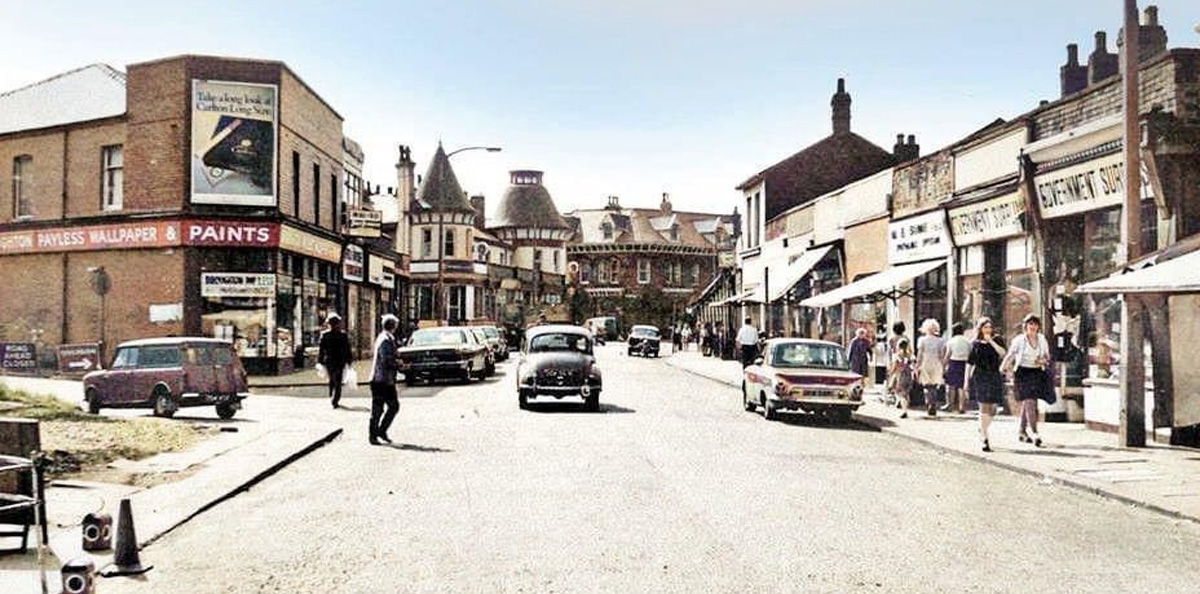
View North Along Lower Broughton Road (Facebook – We Grew Up in Salford)
Lower Broughton Road ran parallel to the river – a hundred metres away. Dozens of small streets filled that space. One of these was Coburg Street which was the boyhood home of folksinger-playwright, Ewan MacColl. His most famous song, “Dirty Old Town” reflects his memory of Salford.
Wheaters Field was once situated on this section of the road. Now home to River View Primary School, this was a rugby league stadium where Broughton Rangers – founder members of the Rugby League – once played and where the Challenge Cup Final was played on two occasions in 1907 and 1921.
Approaching the road bridge on Fredrick Road, there was a local recreation ground known as Spike Island. A small factory next to this made sausages and was owned by the Read family. Al Read became a national figure on BBC radio in the 1960s when his weekly comedy show was said to have reached an audience of more than twenty million.
PHOTO CREDIT: Facebook Group – We Grew Up in Salford
Explore the rest of the trail…