The Salford Blitz
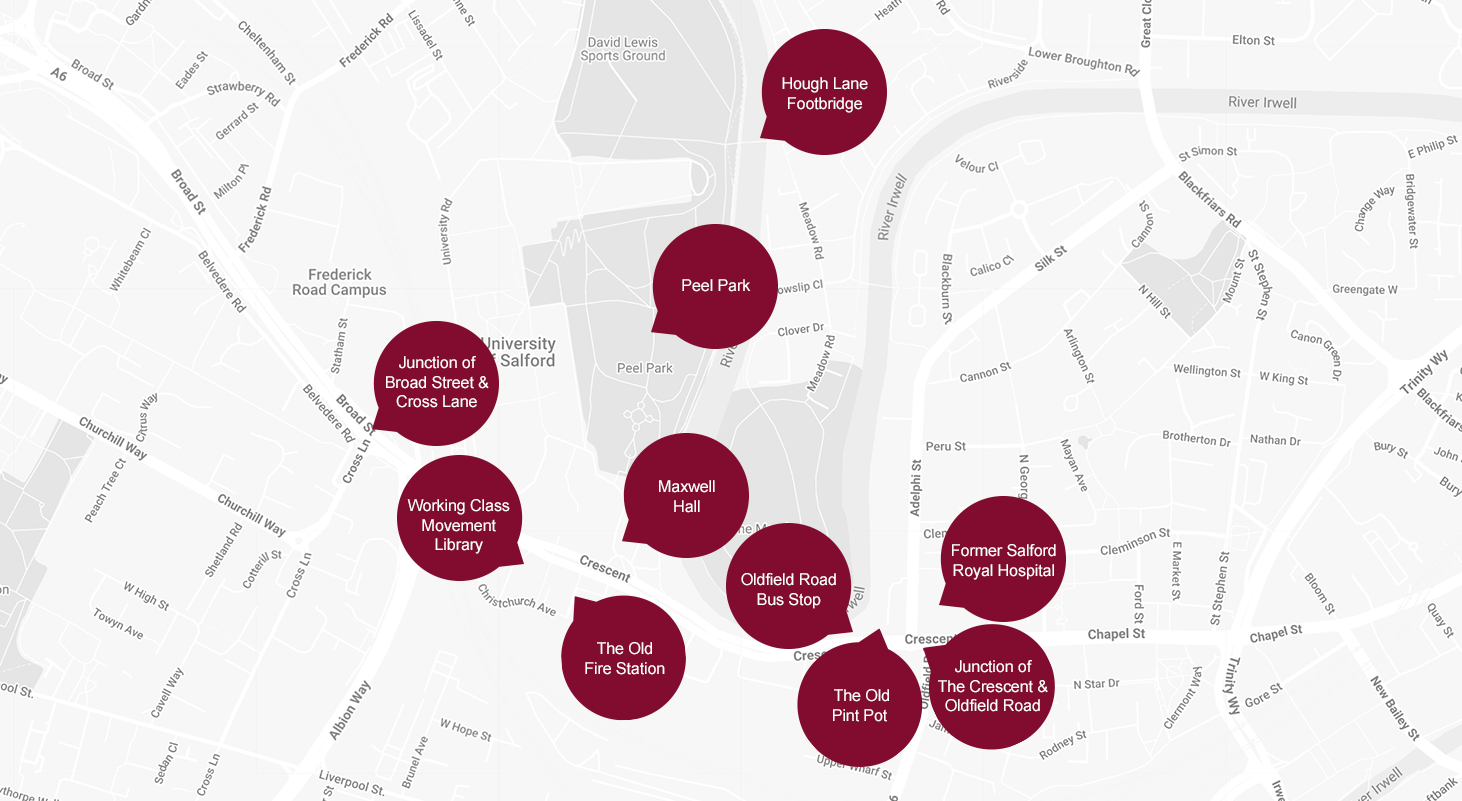
Former Salford Royal Hospital | Kai Dodimead – University of Salford
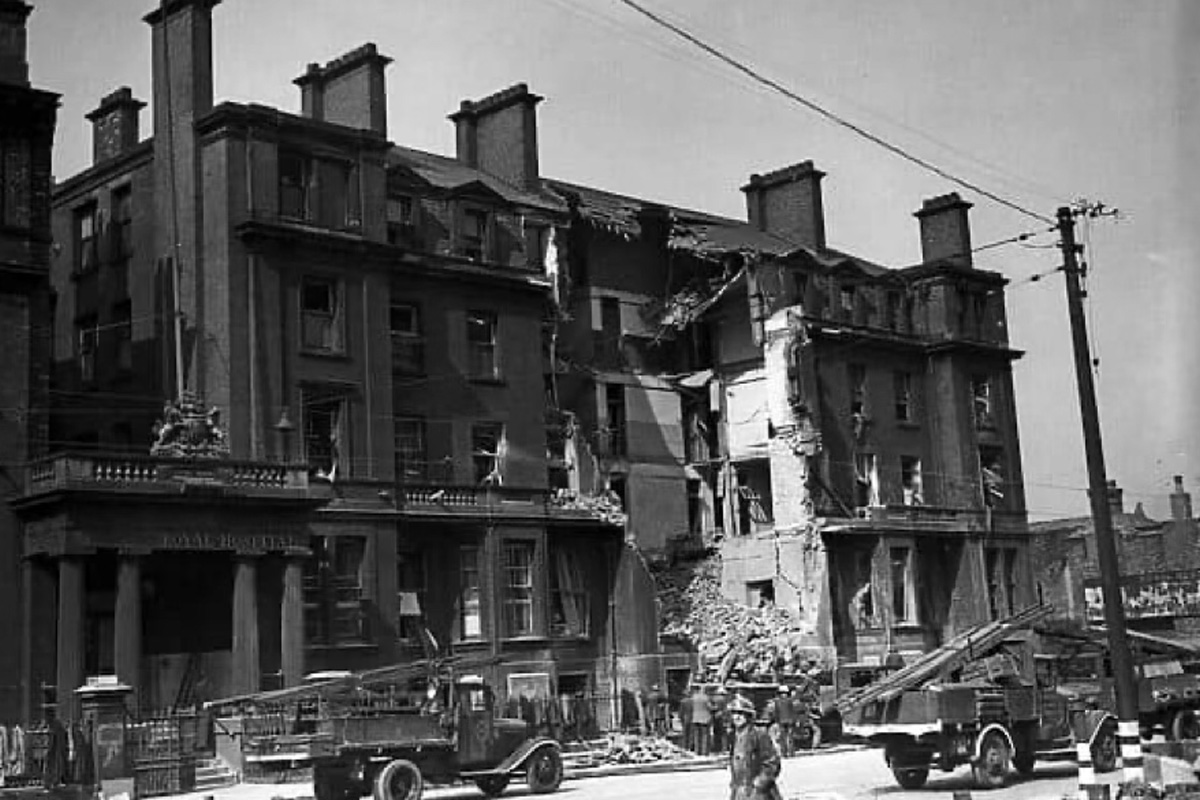
“The Royal Hospital, Salford, Manchester, after it was bombed in World War Two. Bombed in June 1941.Raids on Manchester started in August 1940 and lasted until June 1941.” Picture taken circa 30th June 1941. © Mirrorpix
Want to listen instead? Click below.
During the night of 1st-2nd June 1941, the city of Salford faced its final night of conventional terror bombing from the German Luftwaffe. By consulting the Salford Local History Library, contemporary newspapers, and other research, we can obtain a glimpse into the bombing of the Salford Royal Hospital. Through this incident we can see the effects of scars in the urban landscape of Salford and understand the story of a few select citizens from the young city all those 84 years ago. Between 22nd December 1940 and 2nd of June 1941, Salford’s night skies were intermittently besieged by the ominous sounds of a symphony of warbling engines – with Salford suffering 14 air raids during this period. 400 miles away, envious eyes gazed at the white Cliffs of Dover. The German Luftwaffe sought the pacification of Greater Manchester. It was to attempt to achieve this through the destruction of Manchester’s railways and canal infrastructure, its Trafford Park wartime industry, and by obliterating Salford docks. As silhouettes of German bombers sliced through the night sky, Salford prepared for the bombing war arriving on Britain’s shores.
At 1:22 am on June 2nd, 1941, the first bomb incident of that night was reported in Salford. For context it is important to provide a brief overview of Salford’s Civil Defence structure. During air raids, a Salford warden from his post would sight and report incidents to a Control Centre and, if a fire was started to Fire Control. Then the Controls could order out the necessary ambulance, rescue, and fire parties, with the warden returning to the incident. During the night of June 2nd, 1941, Salford was to be heavily hit, with 14 Hospital staff to fall victim to the German raid including three Sutton nurses. At 0:26 am an air raid message yellow was circulated, acting as a preliminary cautioning for a possible air raid attack. At 0:37 am, this was escalated with the sounds of the “wailing Winnie” air raid sirens breaking out across Salford.
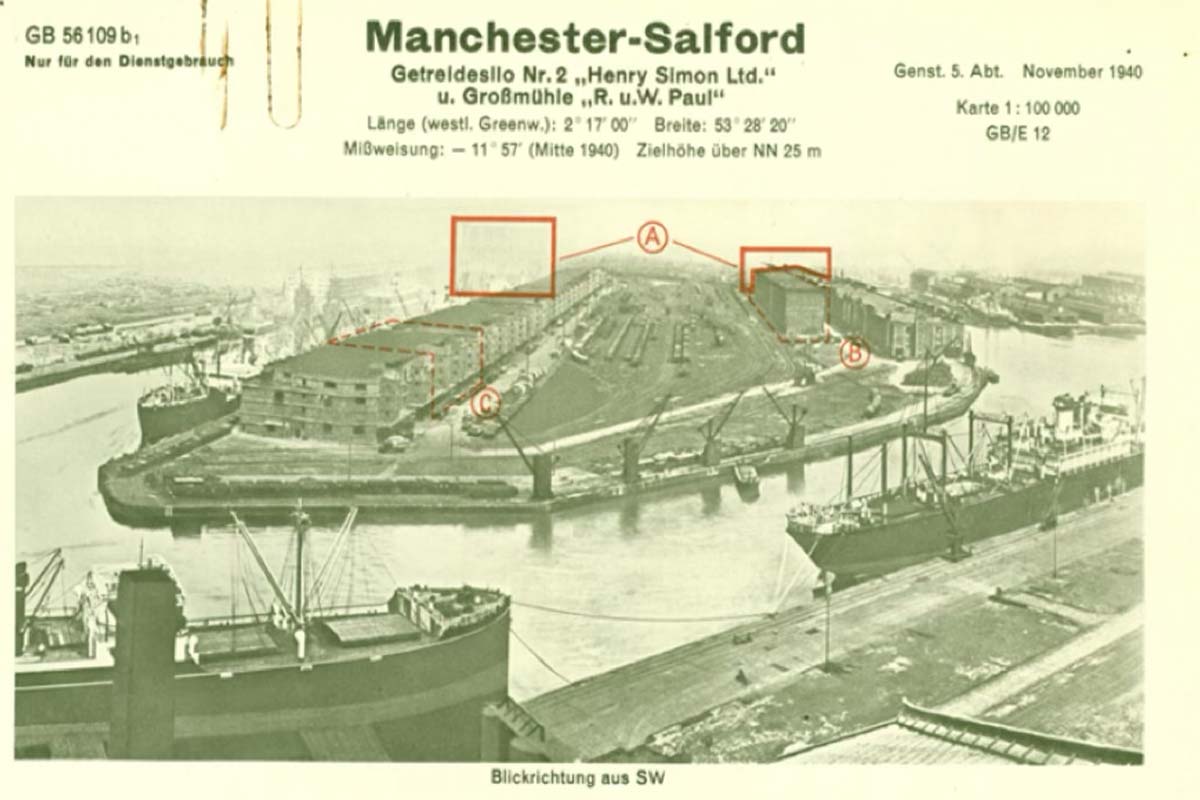
Luftwaffe target photograph of Salford Docks, November 1940 (NARA)
The Civil Service mobilised 5,593 members of the Corps composed of a part-time strength for each section of: 87.6% of Wardens, 78% of Fire Wardens, 85.9% of Cyclist Messengers. In the early hours of June 2nd, Dr Wyse supervised the removal of the patients of Salford Royal Hospital alongside the nurses, in all they helped evacuate 150 patients from the hospital to nearby safety. Some of these nurses had only performed the first few weeks of their training At 2:05 am a H.E. (Heavy explosive) bomb was reported at Chapel Street, St. Philip’s Square. The Salford Royal Hospital had received a direct hit, collapsing a basement shelter where hospital nurses and their tutor sought refuge. The H.E. bomb was identified as a 100 kilo magnesium incendiary bomb, which itself in one interpretation could have teared its way through the upper floors of the Nurses Quarter before deflecting and detonating in the roadway, caused the demolition of the building — killing 14 nurses and burying a number of nurses under the highly volatile rubble. Later the 30 to 40 tons of rubble above this shelter had to be dislodged by vibration.
From that night, at great mortal risk, these individuals below embodied the highest level of bravery, endurance, and gallantry endangering themselves to save the nurses in the rubble. G. Aspin (Squad leader, rescue service), D.M. Barlow (Staff Officer, casualty Services), W.A. Walker (City Engineer and Head of Rescue Service), A. Edwards (Superintendent Parka and Rescue Leader), and Dr R.W. Wyse (Resident Surgical Officer, Salford), Sergeant Lindsey, Police Fireman Irwin, Auxiliary Fireman 678 Kean, and Auxiliary Fireman Smith, all exhibited these qualities in the effort to free the trapped nurses.
Lindley and Kean arrived immediately at the scene, following the detonation of the bomb, and identified and extricated two nurses in the rubble. Mr Walker, despite being blown down by near misses of bombs, answered the priority call on the Salford Royal Hospital. At the site, Edwards succeeded in removing debris which enabled the rescue of a nurse at the risk of being buried under the rubble. A key story at the site was began by Irwin and Smith who discovered a second female nurse trapped under the rubble. Subsequently, Aspin and Barlow spent hours meticulously removing stone after stone of debris around this nurse to try to free her. This nurse had proved impossible to release from the rubble due to her left arm being trapped by a heavy girder and tons of debris.
After it was determined that it was necessary to remove the nurse’s arm to free her, Dr Wyse administer morphia to her and performed a multi-hour amputation of her left arm, but tragically she died a few days later according to the Manchester Evening News. Dr Wyse also provided medical attention to another nurse in the rubble and later returned to the hospital wards to provide surgical treatment to that nights air raid casualties. After 10 hours of the combined efforts of the Civil Defence Services, the first nurse who was rescued from the site was Phyllis Norman. Norman in 2001 unveiled a plaque commemorating the 14 nurses who died in this air raid at Salford Royal Hospital.
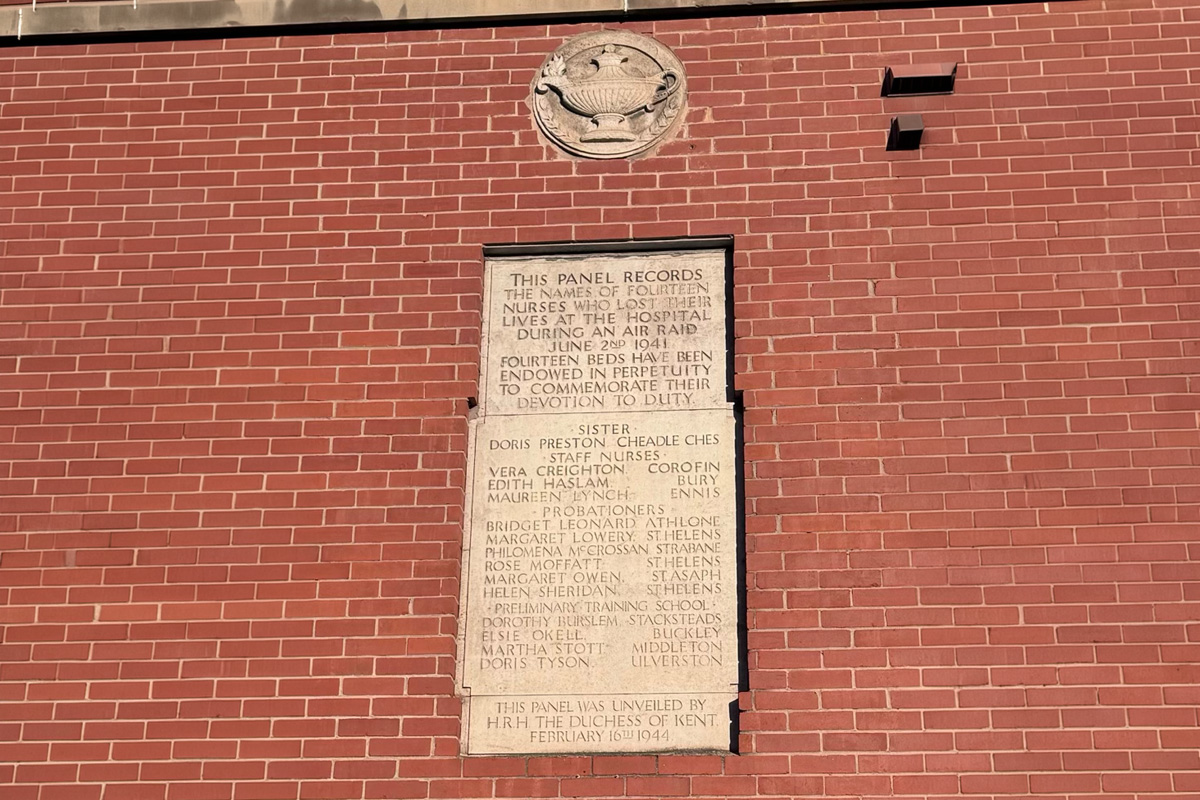
Picture of memorial to the fourteen nurses who lost their lives at the Salford Royal Hospital (Authors own)
In total, the air raid on the 1st-2nd June 1941 on Salford killed 43 people, with 139 injured, and 37 seriously injured. The air raids caused considerable damage in the city with the destruction of 600 dwelling, with more than another 9000 buildings damaged. One conclusion of the Salford Blitz is that the Fire Wardens were responsible for no serious fires developing during the night – they suffered 6 dead and 48 injured. For nearly 17 days Salford was subject to red air raid warnings under the direct threat of the Luftwaffe bombers.
In total, the Civil Defence Services suffered 25 dead and 95 injured in defence of the city. Salford itself had suffered 263 dead, 16 missing, and 1207 injured during the Salford Blitz. The Civil Defence Services should be recognised and praised for its contribution in saving Salford resident lives in the face of terror, death, and sacrifice and we should commemorate and remember those brave 14 nurses who died in the line of duty.
PHOTO CREDIT: As Above
Explore the rest of the trail…